Sunday, August 23, 2015

TCM: Eating Goat


If you are currently pregnant and overdue, Naomi-San says, "Go eat goat," which is tradition to bring about labor. The meat is very good, like a stew meat. Naomi-San says it is very similar in taste and texture to deer meat.
Goat meat benefits the heart, spleen, digestive system, kidneys, reproductive system, fights fatigue and weakness, gives strength, nourishes body and brings warmth. It is also well-known for arousing sexual desire.
TCM holds that goat meat is especially good in winter as it contains hot energy, warming and powering your system. The infusion of yang energy can help relieve blood stasis (poor circulation, menstrual irregularities). 
**Do not eat goat meat if you have high blood pressure or other cardiovascular conditions.  The locals always come across people who have high blood pressure eating goats, and say they almost felt like their veins were going to explode.  So if you have high blood pressure, goat is not recommended. **

(Info taken directly from Okinawa Natural Herb Meal FB page - words adjusted slightly.)
(Photo from https://s3-ap-northeast-1.amazonaws.com/okinawaclips3/ja/images/2508.jpg)

Sunday, August 9, 2015

Okagesamade

There are many Beautiful Japanese phrases that cannot be translated. 美しい日本語でなかなか通訳できない言葉のひとつ『お陰様で』 の解説。"Okagesamade" (Oh-kah-gay-sa-ma-deh) is one of them.

Generally it is translated as, "thanks for asking" but the true meaning behind it is,
"With everyone's help, being in our shadow, everything is going well or everything went well" 

This phrase is used on a daily basis for answering, "How are you doing?", "How is your work?" or "How is someone's condition?" The Japanese will say "okagesamade".


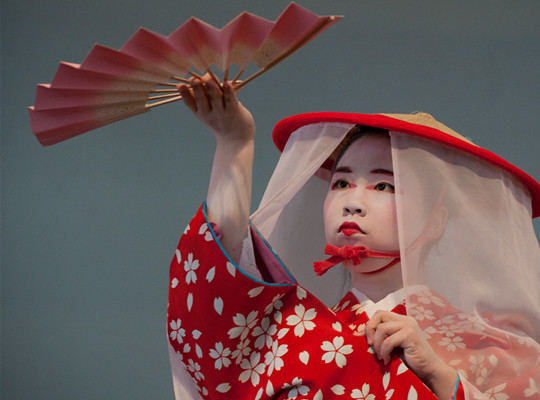
This phrase encompasses gratitude for the efforts of everyone involved.  For example, a Japanese Traditional Dance Performance (Nihon-buyo).   There are many things that require attention to detail. It is not just about the performers but also the sensei's efforts in teaching and the master teacher's guidance. There are so many people involved including those doing hair and make-up, those who set-up for the event, and the guests who came to watch. Without all of these people, the performance would not have been possible.

So when asked how the performance went, the Japanese will say "okagesamade" ("with everyone's help being in our shadow, everything is going well/everything went well." ).

You can tell that this phrase has a very deep meaning but unfortunately it is translated simply as "Thanks for asking."

(Info adapted from a post by Naomi Ohara on Okinawa Natural Herb Meal's FB page.)
(Image from https://c1.staticflickr.com/7/6106/6883412552_0dfd4bd8df_z.jpg)

Thursday, April 23, 2015

Medical Evacuation to Tripler Army Medical Center

So you or someone you know has joined the ranks of those who need to be medically evacuated from a Pacific Duty Station.  Now what?

Well, the process is slightly different depending on your individual situation.  I'm going to try to be as general as possible in this post so that it might be helpful to you.

Recap:  Our 3 month old was diagnosed with GBS (Group B Strep) that presented as bacterial meningitis.  They were able to handle her condition on base until she started having seizures.  As Okinawa has no pediatric neurologists on base, she was sent to a Japanese PICU in Naha until she could be medically evacuated to Hawaii.

1.  Packing / Family Care Plan

Once you know that you will be evacuated, start packing immediately.  This is particularly important if you have several people to pack for.  Even if you have a scheduled flight, it can change at any time.  (This is the military after all.)  Our plane was grounded for maintenance and we ended up flying out a full day early.

Each family member is permitted 2 bags and a carry-on.  Do not ignore the weight limits for luggage on military flights because they will not allow you to go over.  Also, talk to your case manager to find out if there is a possibility that you may not be returning to your duty station.  Packing for an extended "vacation" requires a different type of packing than when you're packing for a PCS.

**It is always a good idea to pack copies of the medical records for all individuals traveling. **

Remember that pesky family care plan you were required to complete within 30 days of arrival?  Now is when it comes into play.  Did you somehow get away with not turning one in? Well now things are going to be that much harder for you.

Every care plan is family specific so it's up to you to determine what's best.  Who will your kids/pets be staying with while you're gone?   Who will watch your house so it doesn't mold?  Who's going to sell your island car for you if you aren't coming back?  There are so many things you will need to think about and take care of before you leave.

Just remember, stay calm and try not to worry or stress out.  What doesn't get done are the things that are less important.  Your command will be able to help you with some things.  Your awesome military friends will certainly help you with the rest.

** Marines on Okinawa who still need to complete a Family Care Plan can take the Family Care Plan class through Marine Corps Family Team Building to help them figure out what needs to be done for their family.  It's not an all inclusive class because all families are different and they don't want to keep your there all day long.  But it does go step by step over the process of what all you'll need paperwork wise to make your care plan functional (POA's, wills, etc) and different categories and topics you'll need to consider that you may not have thought of. **

2.  A flight has to be secured.

In a true emergency, they would be able to obtain one within several hours.  The patient has to be stable enough to make the 8+ hour journey.  In our case, she was in good hands so this was not necessary.  As Okinawa has a routine medical evacuation flight scheduled to leave every Thursday.  

3.  Non-Medical Attendant

The command will assign a non-medical attendant tot he patient if they are a child or in a state they will not be able to make their own medical decisions.  In the case of families, it is up  to the command who will be assigned.  They may allow the service member to go, assign another family member to be send, and/or send the entire family.  No matter how many people they send, there will only be one non-medical attendant assigned at a time.

Our command assigned my husband (the service member) to be the non-medical attendant for the duration of our daughter's hospital stay but also sent the entire family which is an exception to policy.  I was sent because I'm a breastfeeding mom and the patient was our baby.  My older daughter was sent because both of her parents were going.

Upon discharge, my husband will be returning to Okinawa to facilitate paperwork and potentially check out.  At that time, I will become the non-medical attendant and oversee all of my daughter's post-hospitalization care until we are either sent back to Okinawa or my husband "picks us up" on the way to our new duty station.

***** Important Post Update:  If additional family members are sent that are not specified non-medical attendants, ensure that they are listed on your medical evacuation orders not just the medical flight manifest.  If not, they will be required to fly space-a or you will have to purchase them a ticket in order to return to your original duty station.  No joke.  They tried to make our 4 year old Space-A home by herself.......*****

4. Medical Team Assembled

The hospital will assess the patient's individual needs and assign personnel and equipment as needed.  Each patient has their own staff attending to them.  No sharing.  That way if anything should happen during the flight they are up-to-date & knowledgeable about what they are dealing with and won't be stretched thin with multiple patients.

We had the privilege of being escorted by the Neonatal Transport Team: 18th MDOS/USNH Okinawa.  Although I hope no one ever has to use their services, know that you are in excellent hands.  They are extremely friendly yet professional and really know the in and outs of their jobs.  I especially liked how well informed they kept our family throughout the process and loved on our little one.

5.  Aero Vac Brief

All travelers are required to attend the Aero Vac "Brief" before departure.  This basically consisted of going line by line over the safety paperwork and a short description of what the flight would entail.  Then you sign your life away and shuttle off to the runway.

6.  Depart for Hawaii / Tripler Army Medical Center

Let's Recap:  

You find out you're being medically evacuated and you have to...?

That's right.

Pack / Carry Out Family Care Plan

Wait and try not to stress.

Go to a brief and leave.

The hospital takes care of everything else.

Friday, June 13, 2014

Sueyoshi Park & Shrine

Sueyoshi Forest is located in the heart of Naha city and yet you can drive right past it and not even notice that it is there.  Which is a shame really.

O and I went there to wander the forest and see the Sueyoshi Shrine.  I had heard about it on Map It Okinawa and was eager to go.  I think the amount of walking he mentioned was down-played... he said be prepared to do a lot of walking.  That's it.  What he meant was this is a HUGE park in the city and be prepared to do TONS of walking.

It's a beautiful park though.  A river runs straight through the middle of it and you can see some pretty nice waterfalls.  O is currently obsess with snails and we were able to see some huge ones on the bottom of the overgrown flaura.  There were lots of birds flitting about as well.  And O's favorite discovery were the "shiny bugs", you know, those bugs that have exoskeletons that are like opal colors.  Well, even if you don't, they were really neat.

O and I stuck to the main walking trail.  This means we didn't get off of the winding flat route once.  No stair diversions, no side routes, nothing.  Just the path that, if it weren't made of uneven rocks, I would say was the handicap accessible path.


Even still, by the time we crossed through the forest (all parking lots are a ways away from the shrine... I think we parked at the one farthest away), we were ready for a snack and a rest.  Luckily, there was a playground and a bathroom to be found just below our chosen route.

The playground structure is completely made of wood but was in very good condition.  I was worried about splinters at first but was pleasantly surprised to find it a minimal concern.  It is obviously geared towards older children, but O (3) was doing pretty well on it.

After a little R&R, we went back up the hill to this nice monument.  I'll have to do a little research to find out what it's for.  But I really like the detail.  This basically marks the end of the winding flat trail.  Just after it is a set of stairs that leads you into the wildlife protection area.  It's unsure footing and greenery all the way to the shrine from there.

Luckily for us, they had recently swept through and cleared the paths to the shrine.  Even still, a nice Japanese man we talked to said he saw 2 mongooses while he was there and to make sure not to let O near any of the rock crevices because of the chance a habu was hiding in there.  We didn't see anything ourselves.

He also kindly escorted us up the hill as he had gotten lost himself several times trying to find the shrine and was tired.  I had O on my back, so he didn't want the same thing to happen to us.  Really, this was so thoughtful of him I can't express how grateful I was for this gesture.

Anyways, you make a right at the top of the stairs and continue straight until you find a white obelisk.  Make a left here and you'll see stones for the Sueyoshi Shrine.  Continue straight up, up, up until you see a shrine like structure on the right.  This building is where you buy shrine items.  It and the shrine were closed, but you can walk around.  The shrine itself is just past here.

Do NOT go through the stone tunnel.  If you look up, you'll see the shrine.  Take the stairs to the right of the tunnel and follow the steps up to the main shrine.

We climbed up to the shrine itself instead of stopping at the collection box.  The view from there was well worth the climb just to take it in.

We really enjoyed sitting there eating some bread and just looking out over the forest and past the city in the background.  A nice breeze coming over the hill also took the edge off the heat of the day.

By this point, it was nap time and we were still far away from the car.  Going back was much quicker since we were going down the rugged terrain and then I carried O up the winding path.  Still, juice and Anpanman cookies were a much appreciated treat at our arrival to the car.

Overall, we were hot, sweaty, sticky and tired at the end, but the beauty and peace of the morning was well worth it.  I hope you are able to visit this park sometime.

Wednesday, January 1, 2014

Japanese New Year - Nengajo (New Year Cards)

Features of Nengajo:

1.  Duty -

Japan has various customs where you give something to someone because it is your social duty.  Nengajo is on of these.  Basically, you should send nengajo to everyone you know.  Many people are more selective of who they send nengajo too.  However, if you receive a card from someone, you are expected to return the favor (known as a giri card).

2.  Design -

Many nengajo feature the animal from the upcoming year's zodiac.  It is believed that the years represented by the animals affect the characters of people. 

Chinese Zodiac (animals and their characteristics):
  • Rat - an animal with spirit, wit, alertness, delicacy, flexibility and vitality, adaptable, clever and adorable, personable and materialistic, thoughtful, sensible, judiciously and curious, timid, lack concentration and stability, timid, obstinate and selfish
  • Ox - persistent, simple, honest, and straightforward, industrious, patient, and cautious, do things steadily, tender-hearted, obstinate and poor at communication
  • Tiger - brave, cruel, forceful and terrifying, tolerant, staunch, valiant, and respected, intelligent, faithful and virtuous, short-tempered, over confident and traitorous
  • Rabbit - tender and lovely, gentle, sensitive, compassionate, amiable, modest and merciful, and have strong memory, soft-spoken and welcoming, homebody and hospitable, amorous and not determined, soft in appearance and stubborn inside
  • Dragon -  token of authority, dignity, honor, success, luck, and capacity, lively, intellectual, energetic and excitable, magnanimous, romantic and sensitive about their reputation, ambitious, arrogant and impatient, over- confident, eccentric, tactless, fiery, intolerant and unrealistic
  • Snake - malevolence, cattiness and mystery, good tempered, skilled at communicating, sympathetic, determined, intense and passionate, perceptive, jealous and suspicious, courteous   but headstrong
  • Horse - energetic, bright, warm-hearted, intelligent and able, clever, kind to others, cheerful, perceptive, talented, earthy but stubborn, impatient and hot blooded, independent
  • Sheep - gentle and calm, delicate and precious, tender, polite, filial, clever, and kind-hearted, wise and compassionate, worriers who are shy, pessimistic, moody, indecisive, over-sensitive, week-willed and puzzled about life
  • Monkey - clever, lively, flexible, quick-witted and versatile, self-assured, sociable and innovative, with competent practical ability, jealous, suspicious, cunning, selfish and arrogant, tend to look down upon others, impatient and mouthy
  • Rooster - fidelity and punctuality, deep thinkers considered to be honest, bright, communicative, ambitious, capable and warm-hearted, eccentric and have difficulty relating with others, critical, positive but selfish, caustic and too outspoken, narrow-minded and vain, refuse suggestions but would like to lecture others, arrogant
  • Dog - understanding and obedient, faithful, courageous, dexterous, smart and warm-hearted, straightforward, stubborn, cold emotionally, irritable and anxious
  • Pig - laziness and clumsiness, honest and frank, chivalrous and gallant, tolerant and optimistic,  kind and light hearted, loyal, hot-tempered and impulsive
Photos are also common along with common phrases and greetings.

3.  Phrases -

Phrases and Greetings are commonly used on nengajo and can be paired up with design elements as well.  The phrase or greeting you use should be adjusted to reflect the recipient and the level of respect you wish to convey.

Conventional nengajō greetings include:
  • kotoshi mo yoroshiku o-negai-shimasu (今年もよろしくお願いします) (I hope for your favour again in the coming year)
  • (shinnen) akemashite o-medetō-gozaimasu ((新年)あけましておめでとうございます) (Happiness to you on the dawn [of a New Year])
  • kinga shinnen (謹賀新年) (Happy New Year)
  • gashō (賀正) (to celebrate January)
  • shoshun/hatsuharu (初春) (literally "early spring", in the traditional lunar calendar a year begins in early spring)
  • geishun (迎春) (to welcome spring)
For more on writing greetings and expressions visit Writing New Year's Cards.

4.  Lottery -

Store bought cards come with a lottery number on each and every card allowing the recipient to participate in a national lottery.  Prizes vary and winning numbers are announced in mid-January.

5.  Restrictions -

If someone has died in your family that year, you send "Mourning Postcards" earlier in the year to let everyone know that they should not send nengajo out of respect for the deceased.

Sending Nengajo

Addressing and personal messages are usually written by hand or painted with an ink brush to offer the individual a chance to show off their Japanese calligraphy (書道 shodō).

Cards purchased at a stationary store or the post office have pre-paid postage within Japan.  When sending nengajo abroad, fill them out like this.  The post office guarantees delivery of nengajo on 1 January if post-marked by 25 December.

To find out more about Japan and it's customs, consider visiting the Zooming Japan Blog.  It is full of in-depth information about sites and customs.  I got the majority of my info on nengajo from them.  :D